
Coin Hunter - AR Game
A Coin Hunting AR Game to Gain BSNL Benefits
Coin Hunter is an augmented reality mobile game designed to transform everyday environments into interactive spaces for exploration. By combining GPS-based procedural spawning, AR Foundation, and a camera-first interface, the experience encourages users to discover virtual rewards and nearby points of interest through real-world movement rather than traditional map-based navigation.
ROLE: 3D Designer & AR Developer
TIME: 8 Weeks
TOOLS USED: Unity 3D, Blender, Illustrator, Photoshop
CATEGORY: AR/VR Development

What's the Problem?
Modern mobile experiences often fall into one of two extremes: games that keep users focused entirely on their screens, or exploration apps that rely heavily on maps, menus, and information-dense interfaces. As a result, users become passive participants in their surroundings rather than active explorers.
The challenge was to create an AR experience that motivates real-world movement and discovery while remaining intuitive enough for first-time users. The solution needed to communicate rewards clearly, maintain immersion, and minimize interface complexity without sacrificing engagement.
My Tackling Strategy Plan-Out
I approached the project with a camera-first design philosophy, treating the smartphone camera as the primary interface rather than layering traditional navigation systems on top of the AR experience.
To validate this direction, I focused on understanding how users naturally interact with AR environments and what factors influence engagement. Informal testing revealed several important insights:
Users preferred scanning their environment over following map markers.
Immediate visual rewards increased motivation and retention.
Strong visual contrast was essential for outdoor visibility.
Nearby landmarks and points of interest enhanced the feeling of exploration.
Excessive UI elements reduced immersion and distracted from the AR experience.
These findings shaped the interaction model, visual hierarchy, reward system, and overall user journey.
How I Made the Final Story from My Sketch
Coin Hunter was designed around a simple and repeatable gameplay loop:
Scan → Discover → Collect → Reward → Explore
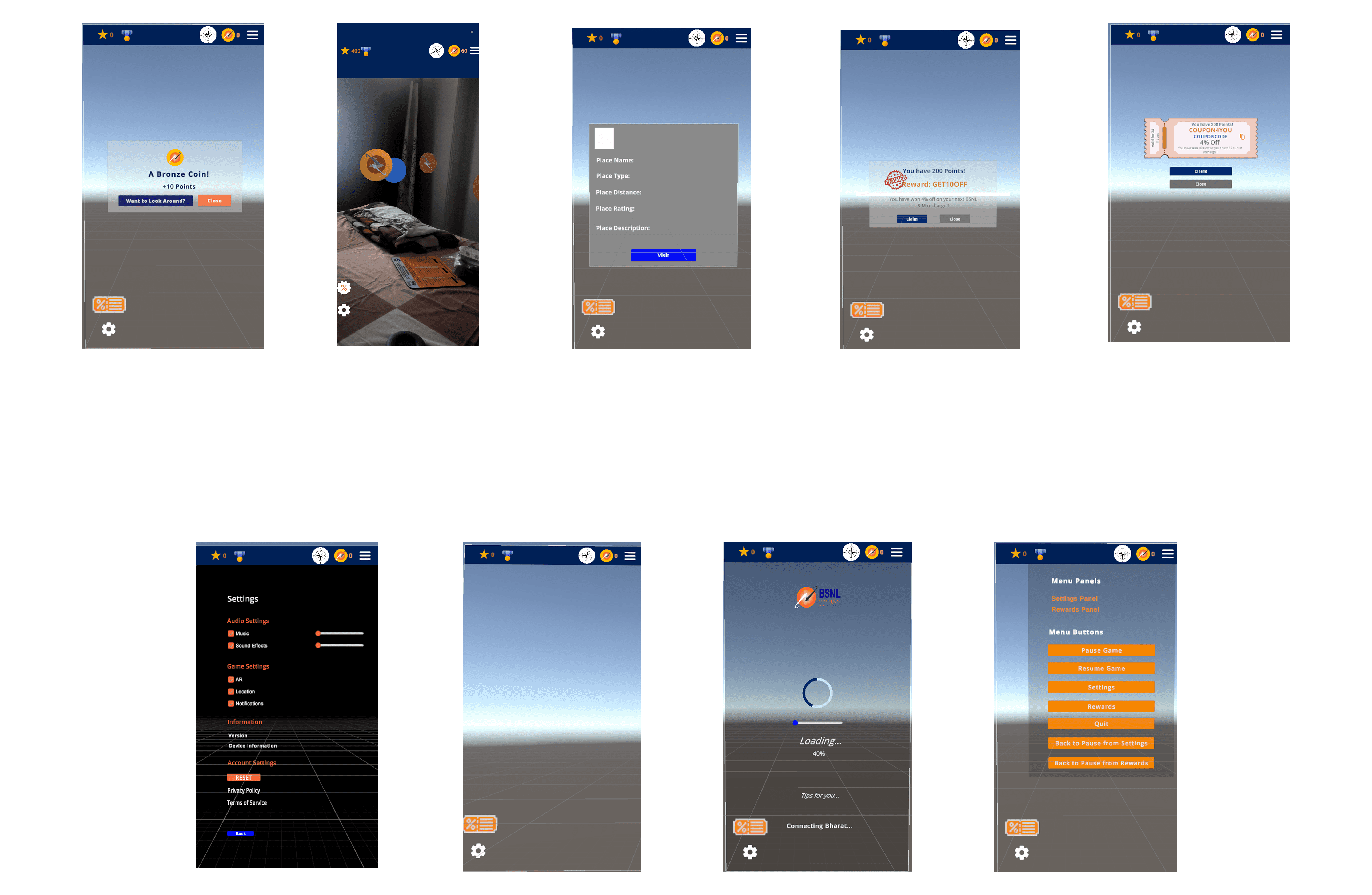
Using AR Foundation and GPS-based spawning, virtual bronze, silver, and gold coins are distributed throughout real-world environments. Each coin type communicates value through distinct visual characteristics, allowing users to understand rewards instantly without relying on text labels.

To maintain immersion, the interface was intentionally minimal:
Essential HUD elements only.
Persistent but unobtrusive score tracking.
Smooth reward animations and collection feedback.
Clear differentiation between coin tiers.
Nearby points of interest integrated into the experience to encourage continued exploration.
The final experience creates a seamless connection between physical movement and digital reward, making exploration feel playful, intuitive, and accessible.
Woah! I Felt Something From This
Intuitive Camera-First Interaction
The experience successfully replaced traditional map-based navigation with a camera-driven exploration model, creating a more immersive and approachable AR experience.
Clear Reward Communication
Distinct coin types, visual hierarchy, and immediate feedback allowed users to understand rewards instantly without relying on excessive interface elements.
Reduced Interface Complexity
A minimal UI approach helped maintain immersion while ensuring users could focus on exploration rather than navigation.
Encouraged Real-World Discovery
The integration of virtual rewards and nearby points of interest transformed everyday environments into interactive spaces for engagement and exploration.
Validated AR Design Principles
The project demonstrated how simplicity, visibility, and immediate feedback can significantly improve usability and enjoyment within mobile AR experiences.
Can't Lie - There Were Too Many Lessons in This
This project reinforced several important principles about designing for augmented reality:
Designing for Context Matters More Than Designing for Screens
Unlike traditional mobile applications, AR experiences must coexist with unpredictable real-world environments. Visibility, contrast, and spatial placement become critical design considerations.
Simplicity Creates Better Immersion
Every additional interface element competes with the physical world. Removing unnecessary UI often improves the overall experience more than adding new features.
Feedback Drives Engagement
Users responded most positively when rewards were immediate, visually expressive, and clearly communicated. Small moments of gratification significantly improved perceived enjoyment.
Exploration Needs Purpose
Users were more likely to continue interacting with the experience when discoveries felt meaningful, whether through points, rewards, or nearby places of interest.
AR Works Best When It Feels Natural
The most successful interactions were the ones that required the least explanation. Designing around instinctive actions such as looking, scanning, and tapping created a smoother onboarding experience for first-time users.
Available